Peer Reviewed Journals and History of Military Chaplain
i. Introduction
The past years have witnessed a marked increase in interest in the question of professionalism in the field of Applied Theology. While questions connected with vocation and calling among the clergy have been a recognised topic in research and the literature to present times1—and the German pastoral theological inquiry in particular has recently discussed professionalism2—the actual upcoming international research focus has been on religious pedagogy teachers' professionalism3. Hence, in 2016, there was a double-themed issue in the British Journal of Religious Education4 and Zeitschrift für Pädagogik und Theologie5 that focused solely on aspects on religious education teachers' professionalism. While studies within international practical theology on the profession of the clergy take been relatively scarce6, studies on military machine chaplaincy in detail are non-existent.
However, there is quite a strong multi-disciplinary body of enquiry on armed services chaplaincy in the Anglosphere in general where much of the research into armed services chaplains is located within military history and military studies, counselling, and pastoral intendance research. Much of such research tin be described as kind of a microhistorical crisis enquiry. Such a trunk of literature includes, for case, the experiences and actions of the military machine chaplains during World War I7, Globe War II8, the Vietnam War9, or even the American Civil War10. Other historical studies or other inquiries on special groups in the ministry include prison chaplaincy11, hospital chaplaincy12, and schoolhouse chaplaincy13.
With this article, we wish to brand a contribution to professional person studies of the clergy by reviewing how armed forces chaplaincy has been portrayed in international scientific journals during the past 20 years. Many changes have occurred during this timeline that make this focus period relevant in Western societies. It is as well a long enough period to observe if there are any specific topics or themes trending. The major societal changes include the re-emergence of organized religion in the public sphere, accommodating religious pluralism and cultural diversity, and questions of national and cultural heritage that have emerged as important questions in Europe and Western societies. On the other mitt, overall, the working environments have become, and are condign, increasingly inter-professional, networked, and technological14. With the examination of the articles we aim to proceeds a fuller picture of the profession of the war machine chaplain today.
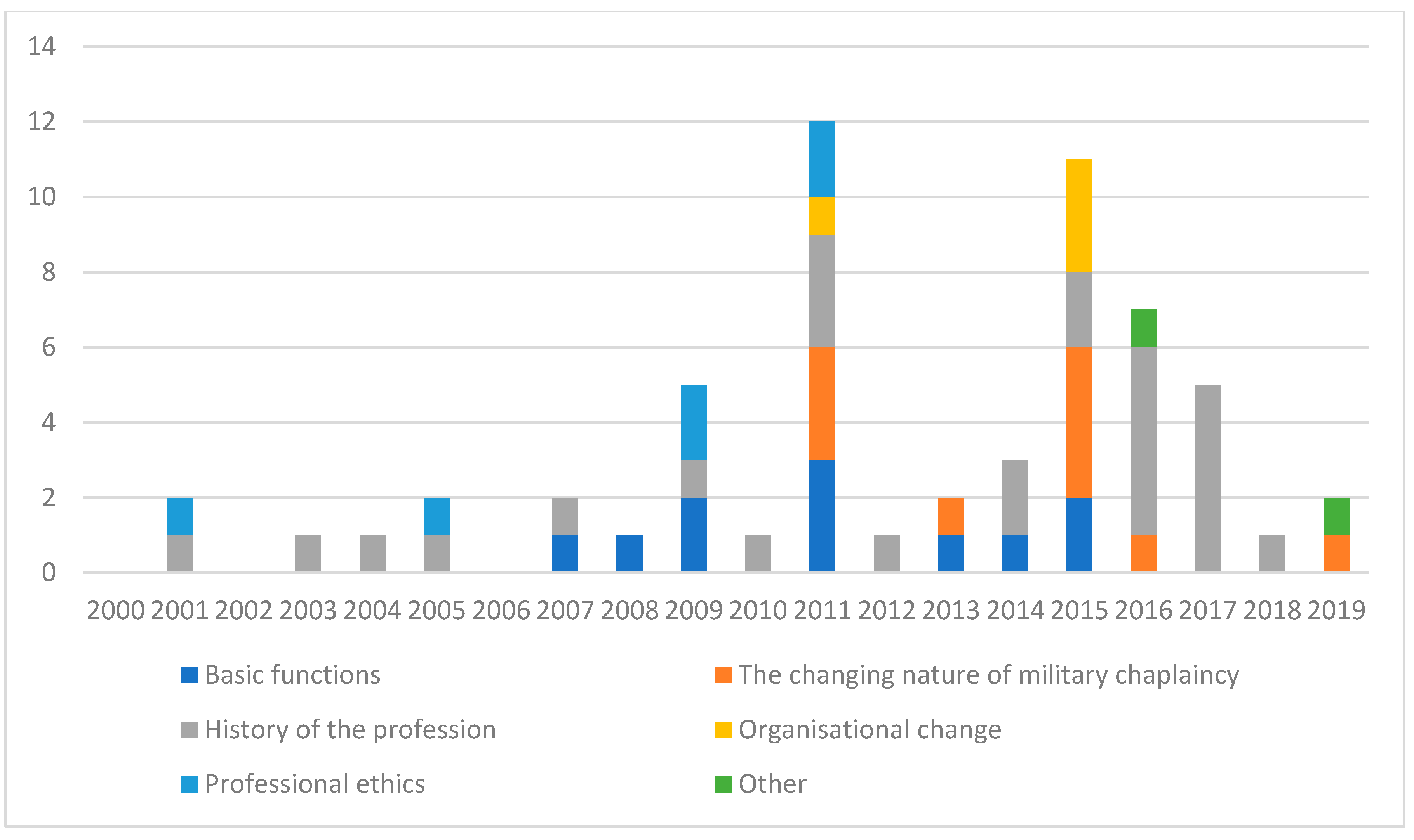
The concrete research question in this article is: How is military chaplaincy in Europe portrayed in European scientific journal articles betwixt 2000–2019? The data of the research included European scientific periodical manufactures that are published electronically in scientific databases including JSTOR and Ebsco. They had to exist written in English language, peer-reviewed, and published in loftier-quality journals or register. The search concentrated on the years between 2000 and 2019 and the content of the manufactures included Europe as a focus. The primary central words used in the search from the databases were military chaplain, military priest, regular army chaplain, military clergy. In addition, to gain information concerning the effect of pluralisation in Europe, Jewish military chaplain, armed services rabbi, Muslim chaplain, and military imam were added every bit search words. These terms narrowed the data to 45 articles. The nerveless articles were analysed by content analysis, and a table listing the backdrop and the details of the articles was produced. The details and properties included the proper noun of the article, data used in the commodity, research method, description of the content, database keyword(s), publication, and the author(s). Appendix A is an elaborated table for the purposes of this publication. The articles, authors, and publications are listed in the leftmost column in the table in Appendix A. In Appendix B, the number of articles is listed past year, and also the yearly thematic division of articles is depicted. The most important outcome of the analysis in the table were the v themes, which describe the topics that the articles concentrate on. These themes emerged from the data through repeated examination and comparing of contents. In addition, in that location were two articles that handled other topics such as the juridical condition of Chaplains in European Armed Forces15 and Military Chaplains in Ukraine.xvi In Appendix A, the names of the v themes are marked in the columns. Many of the articles included content related to more than 1 theme.
ii. Military Chaplaincy in Changing Contexts
In general, the armies of the Western societies deploy some form of arrangement for military chaplain services. While in some countries military chaplains are part of the militia, in some they work from a parish and give formalised services to the servicemen and their families at nearby bases17. While in some states war machine chaplains are representatives of major religious denominations, some countries such equally Finland and Denmark deploy a system where the chaplains serve all the servicemen, regardless of their tradition. The concept of chaplaincy naturally refers to its Christian Cosmic and Protestant origins: Merriam-Webster's dictionary defines a chaplain as (a) clergyman in charge of a chapel, (b) a clergyman officially attached to a co-operative of the armed forces, to an institution, or to a family or courtroom, (c) a person chosen to behave religious exercises, and (d) a chaplain appointed to assist a bishop (equally at a liturgical office)xviii. However, many Western countries increasingly provide established chaplaincy positions for other faiths such as Judaism and Islam thus extending the concept chaplaincy to military rabbis and military imams.
For the past decade, many sources have discussed the changes the traditional professions are facing19 and thus the demand for inquiry to re-examine the conceptions of profession and professionalism.20 Buhai has listed characteristics of a profession using what can be described equally an example of the categorizing taxonomic arroyo.21 These include specialised instruction, expert cognition, public trust, ethos other than profit maximising, continuing education requirement, and duties to the public.22 Admittedly, these characterisations are a helpful tool for distinguishing the well-established professions such equally the law, clergy, officer, approximate, and doctor from 'mere' occupations. However, the taxonomic approach has been criticised for being, for instance, based on 'professional person prototypes' that are taken from 'nineteenth century England'23 and on surface social attributes, therefore making it unsuitable for examining—or identifying—today's modernistic occupations (ibid.).24
In addition, it can be argued that the taxonomic arroyo is non very cognizant of the networked and contextual representation of the profession in a multidisciplinary societal environment. In addition, it does not recognise well the intraprofessional collaboration required today to answer to the complex social questions and demands of noesis-based societies.25 After all, human service organisations and social work professionals exist and function in a reciprocal and interactive relationship with their external environments.26 As a upshot the changes in the environments where the organisations and professionals operate bear on their functions and may challenge the their very cores. Co-ordinate to Schnell, two integral developments that have afflicted research into professions have been identified lately. First the transformation of welfare states and new forms of governance take resulted in the established professions encountering many structural changes in their working surroundings and weather condition. Second there has been a need to re-define the concept of professionalism away from 'narrowed, affirmative and technocratic' conceptions of professions, professionalism, and professionalisation.27
The military chaplain represents an interesting case for studies of professionalism. For instance, it can be argued that professional person and upstanding issues related to serving all strands of citizens with unlike relationships to faith and the Church in national or country churches can exist somewhat highlighted in the professional person practice of the armed services chaplain. Nevertheless, in the context of this study, the fundamental issue is that the military chaplain is a member of two professional cultures whose corresponding professions—the military special officer and the clergy—take not just differing pedagogy and expert knowledge just as well different spheres of public service and ethos.28 Similarly to interprofessional collaboration, the profession of the military clergyman includes within information technology by definition the tensions of the two professional cultures—not to mention the interprofessional collaboration with other professions. Consequently, those engaged in the profession of war machine chaplains today confront many challenges in their work.29.
Hansen has used armed services chaplaincy in the Us War machine as an example when describing the tensions within the profession. He calls the start dilemma of the military chaplains the 'dilemma of diverseness'. In the military, the chaplains serve and piece of work with religiously diverse people groups, and also constitute a 'diverse corps' inside the institution.30 The second dilemma, chosen 'divided loyalties', refers to the role conflicts in practising the profession of military clergyman. Military chaplains are, at the aforementioned time as being ordained clergy and viewed every bit such past civilian faith communities, also commissioned officers in the armed forces. According to Hansen, as a effect, the military machine chaplains have to negotiate between the demands and respective hierarchies of two institutions: The religious and the military while tending for the spiritual and related needs of military personnel. The third dilemma Hansen describes is the 'dilemma of legitimacy'31. One of the integral issues in this is that in many Western countries the military machine chaplains are paid from the public purse regardless of the separation between church building and land, while they are ordained by the church. At the deeper level, this is a question of the role of Christianity and religion in Western societies today32. Furthermore, pluralisation of societies results in many taxpayers increasingly not be affiliated to the same faiths that military chaplains represent.33
3. Results
3.1. Overview of the Themes in the Selected Articles
At that place were 44 articles constitute from the publications between 2000 and 2019 that focused on military chaplains. Effigy 1 presents the frequency of the five themes that were identified in the articles. Many of the articles discussed more one of the themes identified.
The almost mutual themes in the manufactures were history of the profession (f = 26), basic functions (f = xi), and the irresolute nature of the military chaplain (f = x). The other themes discussed focused on organisational alter (f = five) and professional person ethics (f = 5). The themes and their contents are discussed in more particular below. Even so, information technology is noteworthy that the manufactures did not discuss the personal spiritual aspects of the profession of the military machine chaplain at all.
three.2. Basic Functions
Many of the researched articles (f = eleven) focused on the basic functions of the military chaplain (Figure one). The topics belonging to the theme'south bones functions could be divided into pastoral care and religious ceremonies: Instruction was not mentioned in the tasks of the military chaplains in these articles. Most of these articles (f = half-dozen) concentrated on the British Armed forces, and both Ottonian Germany and Republic of austria had one article dedicated to them. The articles showed that military chaplaincy varies quite much depending on the country and the military machine they are working in. The differences can be noticed for instance in their legal condition or in the establishment of religious minorities chaplaincies.
In full general, the articles that discussed the basic functions of the military chaplain emphasised aspects related to pastoral care. In total, half dozen articles discussed this topic. Emotional and spiritual support was reviewed in both historical and modern contexts. In the articles, pastoral care was not discussed solely in relation to Christianity but also related to other religions such as Buddhism and Islam. The first of these articles is a written report about armed forces careers and Buddhist ethics. The article investigates the religious and scriptural position of a Buddhist joining and continuing in the military equally a military machine chaplain in the British Armed services.34 The article on Islam contemplates the question whether 'newcomer religions' constitute organisational challenges for land institutions. In this case, the interest fell upon Islamic religious accommodation in the Austrian Armed Forces. Pastoral intendance related to atheist conscripts was non discussed in any of the articles.35
The second theme that was emphasised in the basic functions of the military chaplains concerned religious ceremonies. This theme referred to topics concerning religious field services, funerals, and bereavement procedures. When the manufactures discussed religious field services the military chaplains were described performing acts of field worship during military machine exercises and war machine refresher courses. In addition, funerals were one class of religious services described in the articles. However, the discussion on funerals was being frequently done in the context of armed forces organisations and therefore it tin be discussed separately. In short, this word of funerals and bereavement procedures focused on issues related to organising burial ceremonies and the bureaucratic process from the death of a military officer or servicemen, transporting the deceased, and notifying the family unit. In general, the articles show how in the example a deceased serviceman, the chaplains communicate with diverse interest groups support military families and accept care of bereavement piece of work in the armed forces. For instance, Cawkill36 and Cawkill and Smith37 have described the military chaplain's role in a case of death and prey in the British Military machine.
A more historical approach to the topic is represented by the individual studies by Howson38, Bachrach39, Gudmundsson40, and Dörfler-Dierken41. Even so, in dissimilarity to the previous articles, Dörfler-Dierken'south piece of work also covers current pastoral intendance practised in the military. The written report focuses specifically on the German Armed Forces from a Lutheran standpoint.
3.3. The Changing Nature of Military Chaplaincy
In total, ten articles discussed the irresolute nature of military chaplains. The topics of these articles could exist divided into two main subthemes: The increase in religious diversity and the developing role of the military clergyman. Nearly of the articles addressed at some level the question of the increase in religious variety in society and the military. In fact, most of the manufactures belonging to this theme focused on issues related to all-around or encountering Islam.
In his article, Hafiz compared the role of the imam in public service to the duties of a mosque-based imam in the Uk. The article argues that information technology is crucial for war machine imams in the U.k. to be able to develop and comprehend democracy, private human rights, and pluralistic values. In the UK, imams in public service piece of work for institutions such equally the armed forces or prisons. Information technology seems that the professional person identity of the "military imam" is based on the context they are working on. Interestingly, the author argues that imams in public service are more suitable for providing a competent imamate for order today than mosque–based imams. The reason is that the imams in public service are, in general, 2nd- or tertiary-generation immigrants who accept already integrated in society: The military imams can be seen as accultured or "domicile-grown" people. This is not the case with the mosque-based imams who are often brought from abroad and thus may lack a common language and view of guild with 2d- or 3rd-generation Muslims. The writer also argues that the military imams besides have a significant office in ensuring that British Muslims integrate in club and develop a good understanding of what it means to be Muslim in Britain.42
The other articles that depict the increase in religious diversity focus on various relevant topics relevant to the changing nature of the military chaplains. In a guest editorial introduction to a special issue focusing on Muslims in European armies, Stoeckl and Roy portrayed the importance of the inclusion of Muslims in the Western European armies as part of the integration process of European Muslim populations. They underline the change in the dynamics in the armed forces, which is caused by religious pluralism in Europe.43 The third article displays cultural diverseness through the position of a Buddhist joining in and continuing in the armed forces in the United kingdom.44 Sociologist Settoul analysed the sociological factors and policies that take contributed to Muslim military chaplains' institutionalisation within the French regular army. The first Muslim chaplains came in the early 2000s. This was called the "diverseness wave", though the French army had already Catholic, Protestant, and Jewish armed forces chaplains.45
The 2nd prepare of manufactures concerning the changing nature of military chaplaincy focus on the developing role of military chaplains. In general, these articles describe ii integral changes with regards to the nature and tasks of military chaplains. Two articles, still, concern ethical issues such as promoting peace regarding serving in the armed services.
The get-go issue focusing on the developing role of military chaplaincy concerns the active function of military chaplains in promoting and implementing inter-religious dialogue and other initiatives in the field. In their article, Gutkowski and Wilkes introduce the challenges presented to NATO armed forces chaplains in conflicts waged in bulk-Muslim countries. They focus mainly on the UK and US forces. Especially after operations in Afghanistan, armed services chaplains can be seen as experts when it comes to facing what the authors call a "foreign religious borderland. This might crusade inner tensions during their missions, equally the bridge-building between the local customs and the military unit may be interpreted as disloyalty to the mission. The commodity, still, points out that there are variations in the actions of the armed services chaplains as it seems that it depends on individual chaplains if they formalise this kind of role as a culturally sensitive human relationship builder.46
The other change concerning the altering nature of the military machine chaplain depicted in the articles describes the changes in moral understanding underlying the task of the military machine chaplain. Dörfler-Dierken has, mainly in Federal republic of germany, rather extensively studied the military environment and religious aspects involved.47 In the article studied here, she highlights the changes stemming from the moral introspection post-obit World War 2 in Germany. The article describes how the self-understanding of the chaplains in the German military machine has evolved from "enhancing combat power to serving the cause of peace". As a upshot, today's armed forces chaplains specially in Frg are expected to work every bit the "moral conscience of the army" and in effect emphasise the individual soldier's freedom of conscience. This change is described to concern especially chaplains from the younger generation. The peace-oriented ethical indicate of view is also promoted on missions abroad and, in consequence, there might be conflicts with the expectations and directions of military superiors and politicians.48
Krainz discussed the changing nature of military chaplaincy by analysing the adaptation of religions in country institutions. He concentrated specifically on Islam in the Austrian Military. Muslim chaplaincy is not withal established within the Austrian state system, including the war machine. This brings a challenge regarding the establishing of pastoral care for Muslim servicemen. Persons practising pastoral care in state institutions should exist professional and have official positions, just now pastors accept emerged just from Christian traditions. It seems that in the Austrian case the formatting process is rather dynamic and as the writer describes it, it is still a "guild under structure".49
Papkova's article evaluates the church building–state relations in President Medvedev's era in Russia. Among other things, the article mentioned that in July 2009, war machine chaplaincy was introduced to the Russian army. In March 2010, chaplains received a legal condition. Therefore, it can be concluded that Russian federation is too facing a new era in armed services chaplaincy and it volition be interesting to see what the future evolution of the profession will be there.50
Finally, the relatively new article by Kühle and Christensen (2019) depicts how, surprisingly, in Kingdom of denmark, even though information technology is ane of the most secularised countries in the world, the demand for and recognition of religious professionals has grown in public institutions such as prisons, hospitals, and in the army. The increased plurality in social club has resulted that the number of enlisted Lutheran ministers has increased substantially in public service. They conclude that the State actually enhances the interaction between the domains of 'religious' and 'secular' in Denmark. To back upwards their claim, the commodity has used several forms of data: A survey of 300 ministers, qualitive interviews of 34 ministers, and other documents and articles.51
iii.iv. History of Profession
The history of the profession was the most common theme concerning the armed forces chaplaincy in the articles. There were 26 articles concerning the historical perspective of armed services chaplaincy. Though there were not many specific categories the articles tin be grouped in terms of their chronologies into the pre-Globe War I period, the WW I- and WW II-periods, and the post-WW Ii period. However, some of the manufactures encompass more one of the eras. The articles showed vast diversity in terms of geographical context and organized religion. The covered countries are Frg, Sweden, Austro-Hungary, England, and Russia. Protestantism, Catholicism, Judaism, and Islam represented religious diversity in the articles.
Near of the manufactures portraying the history of profession discussed the war machine chaplaincy in the time of war (f = 15). There were ii articles that focused on the pre-WW I menstruum. First, Bachrach full-bodied in the commencement article on the war machine chaplains and the organized religion during the wars in Ottonian Deutschland (919–1024). The article especially portrays the part of military machine chaplains as pastoral caretakers and organisers of military machine rites and ceremonies. This constructs a moving-picture show of military machine clergy working for both secular and ecclesiastical purposes.52
The second pre-WW menses commodity was Gudmundsson's article about the religious life in the Swedish army during the Great Northern War (1700–1721). It was the just article about the Nordic countries discussing the history of profession. In his work, Gudmundsson clarifies what the religious life was like to in the army of Swedish rex Charles XII. The main features and foci of the article were the chaplains' duties, the armed forces sermons, the hymns sung in the army, and the soldiers' reading of prayer books.53
The next manufactures concentrate on the menstruation of WW's. Hecht has examined the Jewish military chaplains on duty in the Austro-Hungarian army during World War I. The article focuses particularly on the Jewish military chaplaincy in Vienna. The article shows the interesting item that merely a few rabbis served in the military before WW I, but their numbers multiplied in wartime. The reason was the increase of Jewish people in the general population. The outcome was that the Austro-Hungarian had 3 times more than Jewish armed forces chaplains than Germany.54 Snape, on the other hand, concentrates on the English language military chaplaincy during WW I. The article focuses peculiarly exposing some of the misconceptions regarding armed forces chaplains, for example their active office in the front.55 Rafferty concentrated especially on Catholic chaplains in the British Forces. The article centred around the challenges they faced in times of war. Catholicism was a religious minority in England and Ireland at that moment and due to historical reasons not fully trusted. This mistrust ran both ways: in Catholic attitudes to British Protestant Militarism and vice versa.56
Roman Catholicism was also present in Houlihan's commodity where he analysed Cosmic military chaplains of both Germany and Austro-hungarian empire during the First World State of war. This comparative study embedded the military chaplaincy in the social and cultural history of Catholicism in the corresponding countries by discussing "the effigy of the Catholic military clergyman as a symbolic focal betoken of discussions of religion and warfare, both in literature and in scholarly discourse".57 The last article that was situated in First World War was Davie's study on the ambiguity of military chaplaincy. Information technology was during WW I when discussions concerning the nature and extent of religiousness among serving soldiers in general begun. The article examines war machine chaplaincy through 8 paradoxes regarding chaplains with a military role. Such paradoxes include, for example, representing Christ in military institutions and the tensions arising considering the chaplains were both priests and officers.58
There were 2 articles that focused on the menses of Earth War II. Faulkner'southward article presented Werthmann and the Role of Ideology in the Catholic War machine Chaplaincy, 1939–1945 in Deutschland. The commodity described how the National Socialist Political party tried to limit the services of the Catholic Military Chaplaincy in the High german armed forces. Werthmann did not only see these actions as a direct attack on Catholicism, merely every bit a threat to all Christian cultures and traditions in general. Even though he was strongly confronting the Third Reich ideology, Werthmann compromised with information technology. The reason behind the compromise was the fight against Bolshevism and providing spiritual care for his fellow soldiers. The article makes a point that by doing and then Werthmann and his colleagues compromised their own moral integrity.59 In another article, Howson studied the deaths that had occurred among army chaplains during Globe War II and correct afterward information technology in Smashing Uk.60
In his article, Hagerty describes the military career of a Roman Catholic bishop, Robert Brindle (1837–1916).61 Howson elaborated the reorganisation of chaplaincy in the British army after WW I. The commodity also explored the "interface betwixt the military organization of command and control and those of the churches, through the work of army chaplains. "Command and control" refers to the normally exhorted leadership policy in war machine organisations.62 In the final commodity, Khayrutdinov and Abdullin examine several different periods of fourth dimension to nowadays the development of the Russian Empire's land policy toward Muslim clergy in the army, divisions, establishments, and military institutions. Those periods include the institution and development of a Muslim chaplaincy, its agile involvement, abolition, and finally, the legislative acts towards Muslim clergy. These historical actions take identify at the end of the 17th and the beginning of the 20th Centuries.63
3.5. Organisational Change
In that location were v manufactures that were placed under the theme depicting organisational change. In terms of content, near of the articles were related to the questions that Islam as a newcomer organized religion brings to the war machine chaplaincy at the societal, organisational, and professional levels. The other 2 articles that discussed state–church relations focused on the armed forces chaplaincy at the organisational level. When compared to the number of articles in this theme, one thing that stood out was the various land contexts of the articles, especially every bit one commodity was a European comparative study. The land contexts being Austria, Russia, Great britain, Belgium, French republic, the netherlands, and Federal republic of germany.
In full, three of these articles discussed military chaplaincy in relation to Islam. In the first article on this theme, Hafiz discussed the features of Muslim chaplaincy in the UK and its furnishings from the viewpoint of military arrangement. He emphasises that Muslim chaplains were function of the organisational whole and that they are employed by the state. According to him, this led to iii different outcomes. First, they are nether the aforementioned regulations every bit other employees of the military, including its management structures, and requirements of confidentiality, equality, and safety. Second, to be credible, the Muslim chaplains are subject to the shared ethos and aims of the whole armed services institution. Third, there is a need for good public relation and communication skills both within the armed services organisation and with the Muslim community in Britain. Thus, the practicing Muslim chaplains learn "management skills, office skills and leadership styles" that are not learned in the mosque surroundings.64
A migration and integration researcher, Krainz discusses the thought that "newcomer religions", such equally Islam, pose an organisational challenge for mod land institutions. This article discusses the question of organisational changes and military chaplaincy to the largest extent. In the case of Austria, including Islam in the war machine can be seen as a question of equal handling and the abstention of bigotry. On the other mitt, the military can exist seen as a totalitarian establishment, where individual needs are not accented. He underlines that when a new religion is integrated into an organisation, there must be careful planning that involves cooperation between state institutions and religious organisations. For instance, in Republic of austria, the inclusion of Islam into the armed forces has generated challenges and conflicts for both sides. One issue has been the acceptable representation of Islamic minorities, some other is who gets to represent the Muslims in Austria and with what justification.65
Ane of the integral organisational challenges in Austria is finding the proper candidates for the positions of military chaplains. Krainz explains that there has non been a satisfactory solution for the land or the Islamic community on this result. An interesting detail is that IGGiÖ, Islamische Glaubensgemeinschaft in Österreich (an umbrella organisation of more than 250 Muslim associations), has the right to advise the imams who may serve in the regular army or to advise candidates for the positions of chaplains in the military. Still, the IGGiÖ'due south perceptions of who would be suitable candidates sometimes differ from the land's point of view.66
Michalowski'due south article focused on the organisation of war machine chaplaincy and the opening of the profession to Muslims. She contemplates the question of which religious groups should be eligible for military chaplaincy. Considering of the close ties between the state and Church, in Europe, new chaplaincy posts crave organisational alter, different in the United states. The 'strategic action field', i.east., the religious surroundings, of armed services chaplaincy has been challenged especially by the increasing societal inclusion of Muslims. Co-ordinate to her, the organisation of a Muslim military chaplaincy is also a thing of respecting principles that are cherished in all liberal democracies, such as equality and religious liberty.67
The final two manufactures discuss the organisational modify from a land–church building relations viewpoint. In his historical commodity, Howson describes the reorganisation of military chaplaincy in the British Military afterward the First World War. The Chaplain General of that time issued an edict that the leading chaplain in the military would from that time onward exist simply from the Church of England and non from the Roman Catholic society. The article describes the events that made this into a policy and how the policy was reversed in the 1980s. The latter change had implications for the military structures, every bit military machine chaplains are at present effectively seen as part of the military organisation rather than representatives of the churches in the army.68
Papkova's article focused on church–state relations in Russia, both about and long term. From war machine chaplains' and organisational indicate of view the most interesting part is the 1990s, when the Orthodox elements were introduced to all levels of public didactics, from kindergartens to universities and when the Orthodox chaplains were introduced into the Russian armed forces. In 2009, president Medvedev gave the go-alee for providing salaries to priests already ministering in the armed services, effectively opening the door for the introduction of the military machine chaplaincy. By March 2010, the Ministry of Defence divers the legal status of chaplains (who may or may non exist Orthodox) and had begun actively recruiting pastors for military machine battalions.69
3.6. Professional Ethics
Professional ideals was the 2nd least mentioned topic (n = 6) in the articles. The prevalent theme in the 4 manufactures was the negotiation between military civilization and upstanding perspectives of the military chaplains. The personal contemplation of the MC'due south was emphasised in the articles. In full general, the discussions did not take a strong stand on teaching ethics in the military. However, the chaplains could be seen as the moral conscience of the armed services customs. All the studies in this category focused either on the UK or Germany, even so one commodity included both countries.
The showtime article by Barker and Werker in this grouping studied military machine chaplaincy in international operations. It fabricated a comparison between two different traditions of military chaplaincy. The countries were the UK and Frg. The main difference between the two traditions is that in the Uk, military chaplains are part of the military structure, Deutschland has parish-based Catholic and Lutheran chaplains. Issues related to professional ethics emerged when Barker and Werker examined chaplain vocation and its possible contentiousness in military operations. Based on the article, in Federal republic of germany, the Catholic and Lutheran churches are more nowadays in the discussions concerning professional ethics than in the Britain. An example was given that when at that place were missions with conflicts between the church'southward values and military operations, the church may opt not to ship a representative to these missions. The interviews of the chaplains show that they accepted their function with regards to the ethical stances of the Church building.70
The democratic position of the armed services chaplains with regards to the armed forces operations is likely connected to them not being part of the German armed services structure. Equally church building historian Dörfler-Dierken describes, the German chaplains are not role of the concatenation command in the military. In Deutschland, the chaplains are privileged by law (special church-country relation) and they are obliged to provide upstanding teaching to the soldiers with no regard to their faith. The office of the chaplains is focused on being "the conscience for soldiers. The commodity also raises the chaplains' personal reasoning betwixt ideals and loyalty to soldiers in activity for example in Afghanistan. The challenge is to maintain their ministry among the military action: It is a question of conflict between vocation and justification of state of war.71
In the third commodity that discussed professional ethics, Todd explains how British Army chaplains are educated and prepared regarding justice and peace. Like the first ii articles, this too reflected the challenges of combining the moral civilisation of the military and consideration of ethical thinking that chaplains represented. In dissimilarity to the previous articles, withal, Todd emphasises the personal reflections of the military machine chaplains.72 The fourth article in this group focuses on military careers combined to Buddhist ethics. The article assesses the ethics of Buddhist involvement in the British military machine.73
Two of the articles focus historically on ethical issues related to Armed services Chaplaincy in Germany in WWI and WWII, although the first of these articles includes too comparative perspectives from English Armed services Chaplaincy. The article by Porter74 depicts how the commemoration of World War I by the Armed forces Chaplains to German and English people was founded on resurrected Volk as called people or peace bought by blood respectively and how in both instances the ritual of remembrance emphasised moral action and mobilisation instead of consolation. Bergen's75 article on German Armed forces Chaplaincy in World War 2 depicts how Christian War machine Chaplaincy had bug in plumbing equipment with, being legitimate and function in the prevalent Nazi ideology of the German language army and order.
4. Last Remarks
The focus of this study was how military chaplaincy in Europe was portrayed in European scientific journals during the past decades. In general, the articles seem to portray different aspects of the change in the war machine chaplains' profession. These include the change from ecclesiastical representatives into becoming part of a military machine arrangement. This also involves Muslims, Church of England, and the Catholics. When compared to the others, Islam in general is depicted as a newcomer religion in the manufactures. Based on the review analysis at that place were three common themes recurring in the manufactures. The first of these themes is basic functions, which contains detailed articles of pastoral care and religious ceremonies. The emotional and spiritual back up was reviewed in both historical and modern contexts. It was noteworthy that education was not one of the topics in this section. The second of these themes is the history of the profession. Interestingly, while the recent changes in the profession of the war machine clergyman are evident in the cloth studied, many of the articles focused on historical accounts of the profession. This could well be connected to full general trends in historical research and how inquiry is organised in disciplines but nevertheless may bespeak some stagnancy in the research into military chaplaincy. The tertiary almost popular theme was the changing nature of military chaplaincy. The articles highlighted specially the increase of religious diversity in the military machine and the developing role of the military chaplain in various changing weather condition. These weather were particularly related to accommodating or encountering Islam in the war machine and society.
The results of the review are perhaps connected to the fact that much of the research focused on the European continent. For instance, Scandinavia—particularly Sweden—was only discussed related to the history of the profession. The written report deals with the contextual differences by its emphasis on the portrayal of the military chaplains that are based on historical and geographical factors. The societal, historical, and ramble situation where the armed forces chaplains operate in Scandinavia, Russia, and European NATO countries varies. For case, Islam was discussed mainly in German and United kingdom contexts—a situation that is quite likely changing in the Nordic context—similarly to the developments in the Austrian state institutions. This observation on the contextual differences would be highlighted if the United States, Canada, or Commonwealth of australia had too been included as inquiry contexts in this study. For instance, when compared to Europe, in the The states there seemed to be more manufactures concerning military chaplains from psychological and counselling-related points of view.76 Too, in the US, there are more than studies regarding NATO and international operations than in Europe.77
Military chaplaincy has been a rather pocket-size research bailiwick in the field of international practical theology, though arguably its importance has increased due to European societal change, pluralisation, secularisation, and migration. The articles studied hither seem to highlight a few tensions and broader questions concerning armed forces chaplaincy, including the relationship between Church building and state, the human relationship between a professional representative of a majority faith with members of other religious traditions, and the memberships of military chaplains to two professions. War machine chaplains accept been studied rather widely in other fields of inquiry and in the intersection of military and social sciences. While, for instance, professional studies offer an interdisciplinary framework and some coherence with fresh insights into the mod challenges the professionals face in their practice, the manufactures seemed to exist lacking on the issues that go beyond the professional ethics and exercise of military machine chaplains, such every bit vocation, faith, and spirituality. Furthermore, the discussions in the article would benefit from an informed examination of the positioning of the profession of the military clergy within the Church building body non only organisationally, but also theologically. Thus, we propose an increment in the written report of the clergy—not only military machine chaplains—in terms of professionalism peculiarly within the field of international applied theology in lodge to understand the effects of the inverse conditions in their do also but to remain sensitive to the religious, vocational and catechetical dimensions of their professional exercise.
Author Contributions
T.L. has carried majority of the concrete work with regards of the article, including data gathering and analysis. 1000.U. has collaborated in the process every bit a mentor and guided with the information analysis. All authors have read and agreed to the published version of the manuscript.
Funding
This inquiry was funded by Turvallisuuden tukisäätiö, Maanpuolustuksen kannatussäätiö Church Research Institute, Finland and Reino Ylösen muistorahasto (The Diocese of Kuopio).
Conflicts of Interest
The authors declare no conflict of interest. The funders had no role in the design of the report; in the drove, analyses, or interpretation of data; in the writing of the manuscript, or in the decision to publish the results.
Appendix A
Table A1. The nomenclature description of the European military chaplaincy articles betwixt the years 2000–2019.
Table A1. The classification description of the European military chaplaincy articles between the years 2000–2019.
| Year | Article | Basic Functions | Changing Nature of Armed services Chaplaincy | History of the Profession | Organisational Change | Professional Ethics | Other | |
|---|---|---|---|---|---|---|---|---|
| 1 | 2001 | German Military machine Chaplains in World War II and the Dilemmas of Legitimacy. Bergen, Doris L. Church history lxx, no. 2 (June i, 2001): 232–247. | X | X | ||||
| ii | 2003 | The Organisation of Military Religion in the Armies of King Edward I of England (1272–1307). Bachrach, David Due south. Journal of medieval history 29, no. 4 (2003): 265–286. | 10 | |||||
| 3 | 2004 | The Friars Become to State of war: Mendicant Military machine Chaplains, 1216-c. 1300. 54. Bachrach. David South. The Catholic historical review 90, no. iv (October 1, 2004): 617–633. | X | |||||
| four | 2005 | Beyond Comfort: German and English language Armed forces Chaplains and the Retention of the Great State of war, 1919–1929. Porter, Patrick. Journal of religious history 29, no. 3 (October 2005): 258–289. | X | X | ||||
| 5 | 2007 | Deaths Amidst Regular army Chaplains, 1939–1946. Howson, P. 2007. Periodical of the Social club for Army Historical Research 85, no. 342 (2007): 162–172. | X | Ten | ||||
| vi | 2008 | Military machine Chaplaincy in International Operations: A Comparing of Two Unlike Traditions. Barker, C. R. & Werkner, I-J. 2008. Periodical of Gimmicky Religion 23, no. ane (2008): 47–62 | Ten | 10 | ||||
| vii | 2009 | Death in the armed forces: casualty notification and bereavement back up in the Uk military. Cawkill, P. 2009. Bereavement Care 28, no. 2 (2009): 25–thirty. | X | |||||
| 8 | 2009 | The military career of Bishop Robert Brindle. Hagerty, J. 2009. Journal of the Society for Army Historical Research 87, no. 350 (2009): 123–127. | Ten | |||||
| 9 | 2009 | Reflecting Ethically with British Army Chaplains. Todd, A 2009. The Review of Faith & International Affairs 7, no. 4 (2009): 77–82. | Ten | 10 | ||||
| 10 | 2010 | Against Bolshevism: Georg Werthmann and the Role of Ideology in the Catholic Armed services Chaplaincy, 1939–1945. Faulkner, Fifty. North. 2010. Contemporary European History 19, no. 1 (2010): 1–sixteen. | Ten | |||||
| xi | 2011 | Military Chaplains and the Religion of War in Ottonian Deutschland, 919–1024. Bachrach, David. 2011. Religion, State and Social club 39, no. 1 (2011): xiii–31. | 10 | X | ||||
| 12 | 2011 | The Changing Part of War machine Chaplaincy in Germany: from Raising War machine Morale to Praying for Peace. Dörfler-Dierken, A. 2011. Religion, State and Society 39, no. 1 (2011): 79–91. | X | X | X | |||
| 13 | 2011 | Changing Chaplaincy: A Contribution to Debate over the Roles of US and British Military Chaplains in Transitional islamic state of afghanistan. Gutkowski, S. & Wilkes, G. 2011. Organized religion, State and Society 39, no. 1 (2011): 111–124. | X | |||||
| 14 | 2011 | 'Command and Command' in the Royal Army Chaplains' Department: how Changes in the Method of Selecting the Chaplain General of the British Army Have Altered the Human relationship of the Churches and the Army. Howson, P. 2011. Religion, Land and Society 39, no. 1 (2011): 63–78. | 10 | 10 | ||||
| 15 | 2011 | Military machine careers and Buddhist ethics. Kariyakarawana, S. 2011. The International Periodical of Leadership in Public Services 7, no. 2 (2011): 99–108. | Ten | X | X | |||
| sixteen | 2011 | Orthodox concordat? Church building and state nether Medvedev. Papkova, I. 2011. Nationalities Papers 39, no. 5 (2011): 667–683. | ||||||
| 17 | 2011 | Cosmic Chaplains to the British Forces in the Kickoff Globe War. Rafferty, O. 2011. Religion, State and Lodge 39, no. 1 (2011): 33–62. | X | |||||
| 18 | 2011 | Church building of England Army Chaplains in the First World War: Goodbye to 'Goodbye to All That'. Snape, M. 2011. The Journal of Ecclesiastical History 62, no. 2 (2011): 318–345. | ||||||
| 19 | 2012 | Royal Frameworks of Faith: Catholic Military Chaplains of Germany and Austria-Hungary During the Showtime World War. Houlihan, P. 2012. First World War Studies 3, no. 2 (2012): 165–182. | X | |||||
| xx | 2013 | Bereavement support in the U.k. Armed Forces: The role of the Army chaplain. Cawkill, Paul & Smith, R. 2013. Bereavement Care 32, no. i (2013): eleven–15. | X | X | ||||
| 21 | 2014 | Jewish War machine Chaplains in the Austro-Hungarian Armed Forces During World War I. Bíró, Ákos. 2014. Acta Ethnographica Hungarica 59, no. 2 (2014): 397–406. | X | |||||
| 22 | 2014 | The Consolation of Soldiers: religious life in the Swedish regular army during the Cracking Northern War. Gudmundsson, D. 2014. Scandinavian Journal of History 2014: 1–fourteen. | X | X | ||||
| 23 | 2015 | The armed services clergyman: a study in ambiguity. Davie, Grace. 2015. International Journal for the Report of the Christian Church 15, no. ane (2015): 39–53. | X | Ten | ||||
| 24 | 2015 | Muslim chaplaincy in the Great britain: the chaplaincy arroyo as a fashion to a modern imamate. Hafiz, A. 2015. Organized religion, Country & Lodge 43, no. 1 (2015): 85–99. | X | X | 10 | |||
| 25 | 2015 | The Muslim War machine Clergy of the Russian Empire at the End of the XVIIIth - Beginning of the XXth Century. Khayrutdinov, R. & Abdullin, K. 2015. Journal of Sustainable Development viii, no. vii (2015): 121. | X | |||||
| 26 | 2015 | What is at pale when Muslims join the ranks? An international comparing of military chaplaincy. Michalowski, I. 2015. Religion, Land & Society 2015: 1–18. | X | |||||
| 27 | 2015 | 'Newcomer religions' as an organisational claiming: recognition of Islam in the Austrian war machine. Krainz, U. 2015. Religion, State & Society 2015: 1–fourteen. | X | X | ||||
| 28 | 2015 | 'Yous're in the regular army at present!' Institutionalising Islam in the Democracy'south Army. Settoul, E. 2015. Religion, State & Gild 2015: one-12. | X | X | ||||
| 29 | 2015 | Muslim soldiers, Muslim chaplains: the accommodation of Islam in Western militaries. Stoeckl, Chiliad. & Roy, O. 2015. Religion, State & Guild 43, no. 1 (2015): 35–twoscore. | X | |||||
| 30 | 2016 | A Costless Church Perspective on War machine Chaplains Role in Its Historical Context. Allison, Neil E. 2016. In die skriflig: tydskrif van die Gereformeerde Teologiese Vereniging fifty, no. 1 (March 18, 2016): ane–e8. | X | X | ||||
| 31 | 2016 | Irish gaelic Jesuit Chaplains in the First World War. Lavenia, Vincenzo. 2016. Edited by Damien Burke. Periodical of Jesuit Studies iii, no. 1 (January 2016): 162–164. | X | |||||
| 32 | 2016 | 'Der König rief, und alle, alle kamen' Jewish military chaplains on duty in the Austro-Hungarian army during World State of war I. Hecht, D. J. Jewish Civilization and History 2016: ane–14. | X | |||||
| 33 | 2016 | The Clergy In Khaki (Eastward., Madigan and Yard., Snape (2013):238). The Juridical Status Of The Chaplains In European Armed Forces. Tăvală, Emanuel. 2016. Jurnalul de Studii Juridice Eleven, no. three–four (2016): 23–41. | Ten | |||||
| 34 | 2016 | Inter-Religious Relations in the Shine Armed Forces 1918–1939. Rezmer, Waldemar. 2016. Procedia, social and behavioral sciences 236 (Dec 14, 2016): 374–378. | Ten | |||||
| 35 | 2016 | Pope Saint John XXIII: Army Medic and Military Hospital Chaplain. Watson, Richard A. 2016. The Linacre quarterly 83, no. 2 (May 2016): 142–143. | 10 | |||||
| 36 | 2017 | 'Dextere Sinistram Vertere': Jesuits as Military Chaplains in the Papal Expeditionary Force to France (1569–70). Civale, Gianclaudio. 2017. Subject field, Moral Reform, and Violence." Journal of Jesuit Studies 4, no. 4 (August 2017): 559–580. | 10 | |||||
| 37 | 2017 | A Swiss Protestant Perspective on a Multi-Faith Arroyo to the Swiss Ground forces Chaplaincy. Inniger, Matthias G, Vorster, Jacobus M, and Evans, Byron. In die skriflig: tydskrif van die Gereformeerde Teologiese Vereniging 51, no. 1 (January 1, 2017): 1–9. | ||||||
| 38 | 2017 | Jesuit Catechisms for Soldiers (Seventeenth-Nineteenth Centuries): Changes and Continuities. Lavenia, Vincenzo. 2017. Journal of Jesuit Studies iv, no. 4 (August 2017): 599–623. | X | |||||
| 39 | 2017 | Italian Jesuits and the Great War: Chaplains and Priest-Soldiers of the Province of Rome. Paiano, Maria. 2017. Journal of Jesuit Studies 4, no. 4 (Baronial 2017): 637–657. | Ten | |||||
| 40 | 2017 | Flanders and Helmand: Chaplaincy, Faith and Religious Change in the British Army, 1914–2014. Snape, Michael, and Henshaw, Victoria. 2017. Journal of Beliefs & Values: Special Issue in Honour of the Founding Editor of the Journal of Beliefs and Values, Rev'd Dr W. S. Campbell Guest Editors: Editors: Stephen M. Parker, Imran Mogra and Leslie J. Francis 38, no. 2 (May 4, 2017): 199–214. | X | |||||
| 41 | 2017 | For God And/or Emperor: Habsburg Romanian Military machine Chaplains and Wartime Propaganda in Camps for Returning POWs. Zaharia, Ionela. 2017. European Review of History: Revue européenne d'histoire: Habsburg Home Fronts during the Great War 24, no. ii (March 4, 2017): 288–304. | X | |||||
| 42 | 2018 | The Russian Army and Navy Ober-Priest Thousand. I. Mansvetov: The Pages Of History of the Army and Navy Clergy (19.09.1827-12.eleven.1832). Chimarov, Sergey Yuryevich. 2018. Upravlencheskoe konsulʹtirovanie, no. 3 (April 1, 2018): 159–164 | 10 | |||||
| 43 | 2019 | Ane to Serve Them All. The Growth of Chaplaincy in Public Institutions in Denmark. Kühle, Lene, and Christensen, Henrik Reintoft. 2019. Social Compass 66, no. 2 (June 2019): 182–197. | Ten | |||||
| 44 | 2019 | Recommendations to the War machine Chaplains of the Border Agency on Raising the Level and Saving the Personal Well-Being of the Staff of the State Border Guard Service of Ukraine. Volynets, N. V. 2019. Psychology: theory and practice, no. 1(3) (2019): 32–43. | X |
Appendix B
Figure A1. Number of war machine chaplain related manufactures published per year.
Figure A1. Number of armed services chaplain related manufactures published per year.
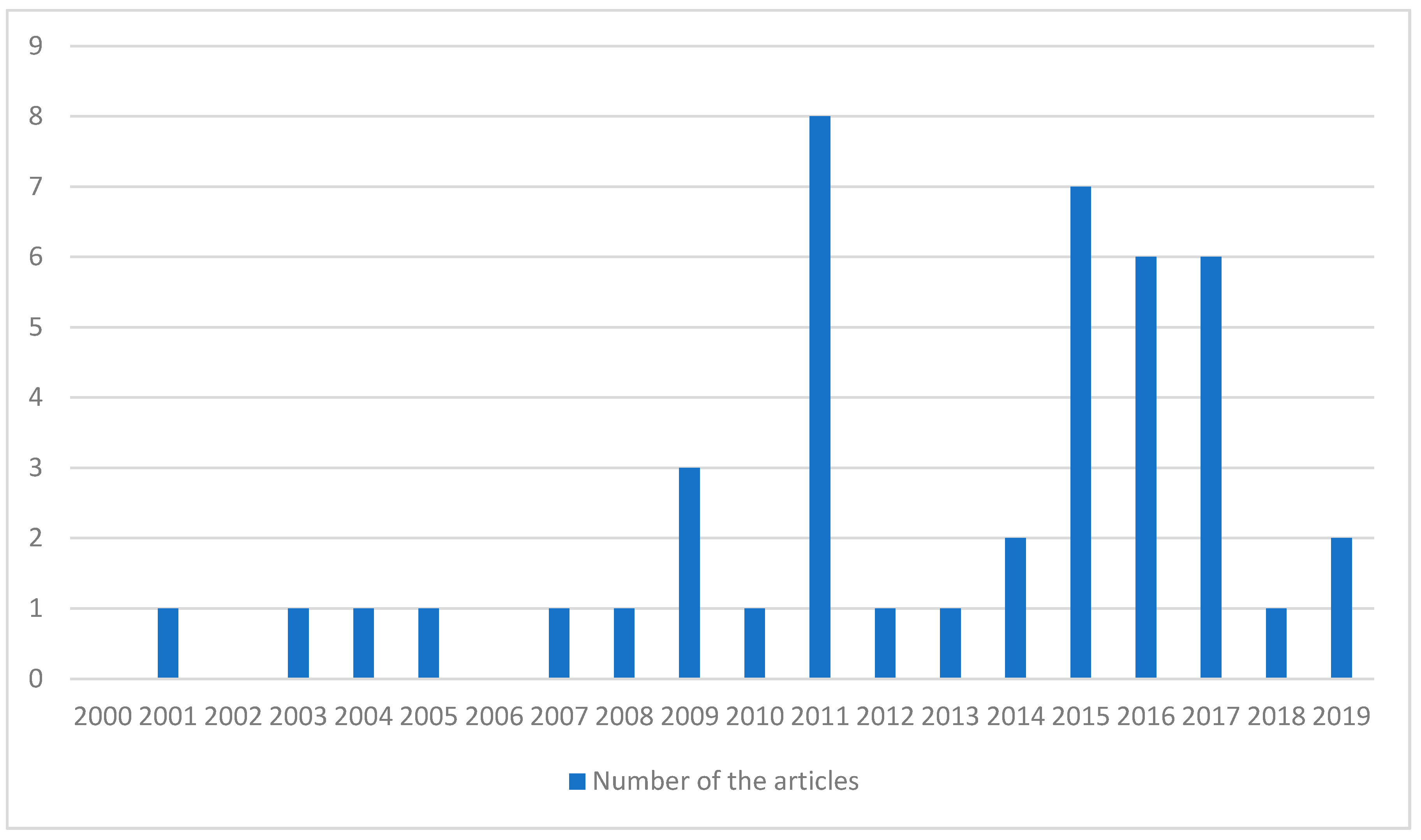
Figure A2. The variety of the topics handled in the articles.
Figure A2. The variety of the topics handled in the articles.
References
- Bachrach, David. 2003. The Organisation of Military Religion in the Armies of King Edward I of England (1272–1307). Journal of Medieval History 29: 265–86. [Google Scholar] [CrossRef]
- Bachrach, David. 2011. Military machine Chaplains and the Religion of War in Ottonian Germany, 919–1024. Organized religion, State and Society 39: 13–31. [Google Scholar] [CrossRef]
- Bakker, Cok, and Hans-Günter Heimbrock. 2007. Researching RE Teachers: RE Teachers as Researchers. Münster: Waxmann. [Google Scholar]
- Barker, Christine R., and Ines-Jacqueline Werker. 2008. Military Chaplaincy in International Operations: A Comparison of Two Different Traditions. Periodical of Contemporary Organized religion 23: 47–62. [Google Scholar] [CrossRef]
- Bergen, Doris L. 2001. Totalitarianism: German Military Chaplains in World War II and the Dilemmas of Legitimacy. Church building History seventy: 232–47. [Google Scholar] [CrossRef]
- Besterman-Dahan, Karen, Scott Barnett, Edward Hickling, Christine Elnitsky, Jason Lind, John Skvoretz, and Nicole Antinori. 2012. Begetting the Burden: Deployment Stress among Army National Guard Chaplains. Journal of Wellness Intendance Chaplaincy xviii: 151–68. [Google Scholar] [CrossRef] [PubMed]
- Brante, Thomas. 2010. Professional Fields and Truth Regimes: In Search of Culling Approaches. Comparative Sociology 9: 843–86. [Google Scholar] [CrossRef]
- Brown, Mary. 2014. Confessions of a Prison Chaplain. Winchester: Waterside Press. [Google Scholar]
- Buhai, Sande L. 2012. Profession: A Definition. Fordham Urban Law Journal 40: 241–81. [Google Scholar]
- Cawkill, Paul. 2009. Death in the War machine: Prey Notification and Bereavement Support in the UK Military. Bereavement Care 28: 25–30. [Google Scholar] [CrossRef]
- Cawkill, Paul, and Richard Smith. 2013. Bereavement Support in the U.k. Armed Forces: The Role of the Army Chaplain. Bereavement Care 32: xi–15. [Google Scholar] [CrossRef]
- Crerar, Duff. 2014. Padres in No Man's Land: Canadian Chaplains and the Swell War, second ed. Montreal and Kingston: McGill-Queen's University Press. [Google Scholar]
- Davie, Grace. 2015. The Military Clergyman: A Study in Ambiguity. International Journal for the Study of the Christian Church 15: 39–53. [Google Scholar] [CrossRef]
- Dörfler-Dierken, Angelika. 2010. Militärseelsorge Und Friedensethik. Evangelische Theologie 70: 278–92. [Google Scholar] [CrossRef]
- Dörfler-Dierken, Angelika. 2011a. Rituale Und Menschenwürde. Jahrbuch Für Recht Und Ethik/Annual Review of Law and Ethics nineteen: 85–105. [Google Scholar]
- Dörfler-Dierken, Angelika. 2011b. The Irresolute Function of Protestant Military Chaplaincy in Germany: From Raising Military Morale to Praying for Peace one. Religion, State and Club 39: 79–91. [Google Scholar] [CrossRef]
- Faulkner, Lauren N. 2010. Against Bolshevism: Georg Werthmann and the Role of Ideology in the Cosmic Military Chaplaincy, 1939–1945. Contemporary European History xix: 1–16. [Google Scholar] [CrossRef]
- Gibelman, Margaret, and Sheldon R. Gelman. 2005. Upstanding Considerations in the Changing Surround. Research in Ethical Issues in Organizations six: 1–xix. [Google Scholar] [CrossRef]
- Gudmundsson, David. 2014. The Consolation of Soldiers: Religious Life in the Swedish Army during the Neat Northern War. Scandinavian Journal of History 39: 1–fourteen. [Google Scholar] [CrossRef]
- Gutkowski, Stacey, and George Wilkes. 2011. Irresolute Chaplaincy: A Contribution to Debate over the Roles of US and British Military Chaplains in Afghanistan. Religion, Country and Gild 39: 111–24. [Google Scholar] [CrossRef]
- Hafiz, Asim. 2015. Muslim Chaplaincy in the UK: The Chaplaincy Arroyo every bit a Way to a Modern Imamate. Religion, State & Society 43: 85–99. [Google Scholar] [CrossRef]
- Hagerty, James. 2009. The Armed forces Career of Bishop Robert Brindle. Journal of the Lodge for Army Historical Inquiry 87: 123–27. [Google Scholar]
- Hansen, Kim Philip. 2012. Military Chaplains and Religious Diversity. Basingstoke: Palgrave Macmillan. [Google Scholar]
- Hecht, Dieter. 2016. 'Der König Rief, Und Alle, Alle Kamen' Jewish War machine Chaplains on Duty in the Austro-Hungarian Ground forces during World War I. Jewish Culture and History 17: 1–14. [Google Scholar] [CrossRef]
- Heimbrock, Hans-Günter. 2011. Den Anderen Wahrnehmen—Herausforderungen für Professionelle Praxis in Kirche und Säkularem Gesundheitswesen. Pastoraltheologie 100: 364–80. [Google Scholar] [CrossRef]
- Houlihan, Patrickj. 2012. Imperial Frameworks of Religion: Catholic Military Chaplains of Deutschland and Austria-Hungary During the First World War. Starting time World War Studies 3: 165–82. [Google Scholar] [CrossRef]
- Howson, Peter. 2007. Deaths among Army Chaplains, 1939–1946. Journal of the Society for Army Historical Research 85: 162–72. [Google Scholar]
- Howson, Peter. 2011. 'Control and Control' in the Royal Ground forces Chaplains' Department: How Changes in the Method of Selecting the Chaplain General of the British Regular army Have Altered the Relationship of the Churches and the Regular army. Religion, State and Society 39: 63–78. [Google Scholar] [CrossRef]
- Johnson, James D. 2001. Combat Chaplain: A Xxx-year Vietnam Battle. Denton: University of Northward Texas Press. [Google Scholar]
- Kariyakarawana, Sunil. 2011. Armed services Careers and Buddhist Ethics. The International Journal of Leadership in Public Services vii: 99–108. [Google Scholar] [CrossRef]
- Katz, Yaacov J. 1994. Chaplain and Counsellor in the Israeli Uncomplicated School: Overlapping or Complementary Roles? Pastoral Care in Education 12: 39–41. [Google Scholar] [CrossRef]
- Kelley, Jessica, Hourani Laurel, Lane Marian East., and Tueller Stephen. 2016. Help-Seeking Behaviors among Agile-Duty Military Personnel: Utilization of Chaplains and Other Mental Health Service Providers. Journal of Health Care Chaplaincy 22: 102–17. [Google Scholar] [CrossRef]
- Khayrutdinov, Ramil, and Khalim Abdullin. 2015. The Muslim Military Clergy of the Russian Empire at the End of the XVIIIth—Beginning of the XXth Century. Journal of Sustainable Evolution 8: 121. [Google Scholar] [CrossRef]
- Krainz, Ulrich. 2015. 'Newcomer Religions' As an Organisational Claiming: Recognition of Islam in the Austrian Armed Forces. Religion, Country & Gild 43: i–fourteen. [Google Scholar] [CrossRef]
- Kühle, Lene, and Henrik Reintoft Christensen. 2019. One to Serve Them All. The Growth of Chaplaincy in Public Institutions in Denmark. Social Compass 66: 182–97. [Google Scholar] [CrossRef]
- McWilliams, Tennant S. 2012. The Chaplain's Conflict: Good and Evil in a War Hospital, 1943–1945. College Station: Texas A&G University Press. [Google Scholar]
- Merriam-Webster Dictionary. 2020. Available online: https://www.merriam-webster.com/dictionary/clergyman (accessed on xiii October 2020).
- Michalowski, Ines. 2015. What Is at Stake When Muslims Join the Ranks? An International Comparison of Military Chaplaincy. Faith, State & Society 2015: ane–18. [Google Scholar] [CrossRef]
- Nieuwsma, Jason A., George L. Jackson, Mark B. DeKraai, Denise J. Bulling, William C. Cantrell, Jeffrey East. Rhodes, Marker J. Bates, Keith Ethridge, Marian E. Lane, Wendy N. Tenhula, and et al. 2014. Collaborating Across the Departments of Veterans Affairs and Defence to Integrate Mental Wellness and Chaplaincy Services. Journal of General Internal Medicine 29: 885–94. [Google Scholar] [CrossRef]
- Opata, Josiah N. 2001. Spiritual and Religious Variety in Prisons: Focusing On How Chaplaincy Assists in Prison house Management. Springfield: Charles C Thomas Publisher, Ltd. [Google Scholar]
- Papkova, Irina. 2011. Russian Orthodox Concordat? Church and State Under Medvedev. Nationalities Papers 39: 667–83. [Google Scholar] [CrossRef]
- Payne, Jennifer Shepard. 2017. It's Kind of a Dichotomy": Thoughts Related to Calling and Purpose from Pastors Working and Counseling in Urban Resource-Poor Communities. Periodical of Religion and Health 56: 1–17. [Google Scholar] [CrossRef]
- Porter, Patrick. 2005. Across Comfort: German and English language Armed forces Chaplains and the Retentivity of the Great War, 1919–1929. Journal of Religious History 29: 258–89. [Google Scholar] [CrossRef]
- Rafferty, Oliver. 2011. Cosmic Chaplains to the British Forces in the First World War. Organized religion, State and Society 39: 33–62. [Google Scholar] [CrossRef]
- Rennick, Joanne Benham. 2011. Canadian Military Chaplains: Bridging the Gap between Alienation and Operational Effectiveness in a Pluralistic and Multicultural Context. Religion, State and Society 39: 93–109. [Google Scholar] [CrossRef]
- Robinson, Alan C. 2008. Chaplains at War: The Function of Clergymen during World War Two. London: Bloomsbury. [Google Scholar]
- Saks, Mike. 2012. Defining a Profession: The Role of Noesis and Expertise. Professions & Professionalism 2: 1–10. [Google Scholar] [CrossRef]
- Schnell, Christiane. 2017. Editorial. Professions and Professionalism 7: one–2. [Google Scholar] [CrossRef]
- Seddon, Rachel, Edgar Jones, and Neil Greenberg. 2011. The Role of Chaplains in Maintaining the Psychological Health of Military Personnel: An Historical and Contemporary Perspective. Military Medicine 176: 1357–61. [Google Scholar] [CrossRef]
- Settoul, Elyamine. 2015. 'You're in the French Army At present!' Institutionalising Islam in the Republic'south Army. Faith, State & Club 43: 1–12. [Google Scholar] [CrossRef]
- Snape, Michael. 2011. Church of England Army Chaplains in the First Globe War: Goodbye to 'Good day to All That'. The Journal of Ecclesiastical History 62: 318–45. [Google Scholar] [CrossRef]
- Stoeckl, Kristina, and Olivier Roy. 2015. Muslim Soldiers, Muslim Chaplains: The Accommodation of Islam in Western Militaries. Religion, Country & Club 43: 35–40. [Google Scholar] [CrossRef]
- Strype, Jon, Helene O. I. Gundhus, Marit Egge, and Atle Ødegård. 2014. Perceptions of Interprofessional Collaboration. Professions & Professionalism 4: 1–16. [Google Scholar] [CrossRef]
- Susskind, Richard, and Daniel Susskind. 2015. The Future of the Professions: How Applied science Will Transform the Piece of work of Human Experts. Oxford: Oxford University Press. [Google Scholar]
- Swift, Christopher. 2014. Hospital Chaplaincy in the Twenty-get-go Century: The Crunch of Spiritual Care on the NHS, 2nd ed. Farnham: Ashgate Publishing Ltd. [Google Scholar]
- Tăvală, Emanuel. 2016. THE CLERGY IN KHAKI (E., Madigan and M., Snape(2013):238). THE JURIDICAL Condition OF THE CHAPLAINS IN EUROPEAN Armed forces. Jurnalul De Studii Juridice 11. Bachelor online: https://www.academia.edu/32891712/JOURNAL_OF_LEGAL_STUDIES_JURNALUL_DE_STUDII_JURIDICE (accessed on 1 Oct 2020).
- Todd, Andrew. 2009. Reflecting Ethically with British Army Chaplains. The Review of Religion & International Affairs 7: 77–82. [Google Scholar] [CrossRef]
- Tucker, Phillip Thomas. 1992. The Confederacy'south Fighting Chaplain: Male parent John B. Bannon. Tuscaloosa: University of Alabama Press. [Google Scholar]
- Volynets, N. 2019. Recommendations to the armed forces chaplains of the border agency on raising the level and saving the personal well-being of the staff of the country edge guard service of Ukraine. Psychology: Theory and Practice 1: 32–43. [Google Scholar] [CrossRef]
- Webb, Benjamin, Melissa Bopp, Meghan Baruth, and Jane Peterson. 2016. Health Effects of a Religious Vocation: Perspectives from Christian and Jewish Clergy. Journal of Pastoral Care & Counseling 70: 266–71. [Google Scholar] [CrossRef]
- Williams, Derwyn. 2007. Parsons, Priests or Professionals? Transforming the Nineteenth-century Anglican Clergy. Theology 110: 433–42. [Google Scholar] [CrossRef]
- Yost, Israel A. S., Monica Elizabeth Yost, and Michael Markrich. 2006. Combat Chaplain: The Personal Story of the Earth War Two Chaplain of the Japanese American 100th Battalion. Honolulu: University of Hawaii Press. [Google Scholar]
| i | (Webb et al. 2016; Payne 2017). |
| 2 | (Heimbrock 2011). |
| iii | (Bakker and Heimbrock 2007). |
| 4 | British Journal of Religious Education 38, Issue ii. (2016). |
| 5 | Zeitschrift für Pädagogik und Theologie 68, Result 2 (2016). |
| 6 | (Williams 2007). |
| seven | (Crerar 2014). |
| 8 | (Robinson 2008; McWilliams 2012; Yost et al. 2006). |
| 9 | (Johnson 2001). |
| 10 | (Tucker 1992). |
| 11 | (Opata 2001; Brown 2014). |
| 12 | (Swift 2014). |
| 13 | (Katz 1994). |
| 14 | (Strype et al. 2014; Susskind and Susskind 2015). |
| xv | (Tăvală 2016). |
| 16 | (Volynets 2019). |
| 17 | (Cawkill and Smith 2013). |
| 18 | (Merriam-Webster Lexicon 2020). |
| 19 | (Susskind and Susskind 2015). |
| 20 | (Brante 2010). |
| 21 | (Buhai 2012). |
| 22 | (Saks 2012; Brante 2010). |
| 23 | (Brante 2010, p. 845). |
| 24 | (Brante 2010, p. 875). |
| 25 | (Strype et al. 2014). |
| 26 | (Gibelman and Gelman 2005). |
| 27 | (Schnell 2017). |
| 28 | (Hansen 2012). |
| 29 | (Hansen 2012). |
| xxx | (Hansen 2012). |
| 31 | (Hansen 2012, p. 2). |
| 32 | (Hansen 2012, pp. 2–three). |
| 33 | (Hansen 2012). |
| 34 | (Kariyakarawana 2011). |
| 35 | (Hafiz 2015). |
| 36 | (Cawkill 2009). |
| 37 | (Cawkill and Smith 2013). |
| 38 | (Howson 2007). |
| 39 | (Bachrach 2011). |
| 40 | (Gudmundsson 2014). |
| 41 | (Dörfler-Dierken 2011b). |
| 42 | (Hafiz 2015). |
| 43 | (Stoeckl and Roy 2015). |
| 44 | (Kariyakarawana 2011). |
| 45 | (Settoul 2015). |
| 46 | (Gutkowski and Wilkes 2011). |
| 47 | (Dörfler-Dierken 2010, 2011a). |
| 48 | (Dörfler-Dierken 2011b). |
| 49 | (Krainz 2015). |
| 50 | (Papkova 2011). |
| 51 | (Kühle and Christensen 2019). |
| 52 | (Bachrach 2003). |
| 53 | (Gudmundsson 2014). |
| 54 | (Hecht 2016). |
| 55 | (Snape 2011). |
| 56 | (Rafferty 2011). |
| 57 | (Houlihan 2012). |
| 58 | (Davie 2015). |
| 59 | (Faulkner 2010). |
| 60 | (Howson 2007). |
| 61 | (Hagerty 2009). |
| 62 | (Howson 2011). |
| 63 | (Khayrutdinov and Abdullin 2015). |
| 64 | (Hafiz 2015). |
| 65 | (Krainz 2015). |
| 66 | (Krainz 2015). |
| 67 | (Michalowski 2015). |
| 68 | (Howson 2011). |
| 69 | (Papkova 2011). |
| 70 | (Barker and Werker 2008). |
| 71 | (Dörfler-Dierken 2011b). |
| 72 | (Todd 2009). |
| 73 | (Kariyakarawana 2011). |
| 74 | (Porter 2005). |
| 75 | (Bergen 2001). |
| 76 | (Kelley et al. 2016; Nieuwsma et al. 2014; Seddon et al. 2011). |
| 77 | (Rennick 2011; Besterman-Dahan et al. 2012). |
Figure 1. The dissimilar themes in the articles.
Figure one. The different themes in the manufactures.

| Publisher's Annotation: MDPI stays neutral with regard to jurisdictional claims in published maps and institutional affiliations. |
© 2020 by the authors. Licensee MDPI, Basel, Switzerland. This commodity is an open access article distributed nether the terms and conditions of the Creative Commons Attribution (CC Past) license (http://creativecommons.org/licenses/past/4.0/).
franklininsconothe.blogspot.com
Source: https://www.mdpi.com/2077-1444/11/10/540/htm
0 Response to "Peer Reviewed Journals and History of Military Chaplain"
Publicar un comentario